
 Image 1 of 2
 Image 2 of 2
The Details
Origin: Kenya
Elevation: 1220-2300 MASL
Variety: Batian, SL28, SL34, Ruiru 11
Harvest: December-February
The Cup:
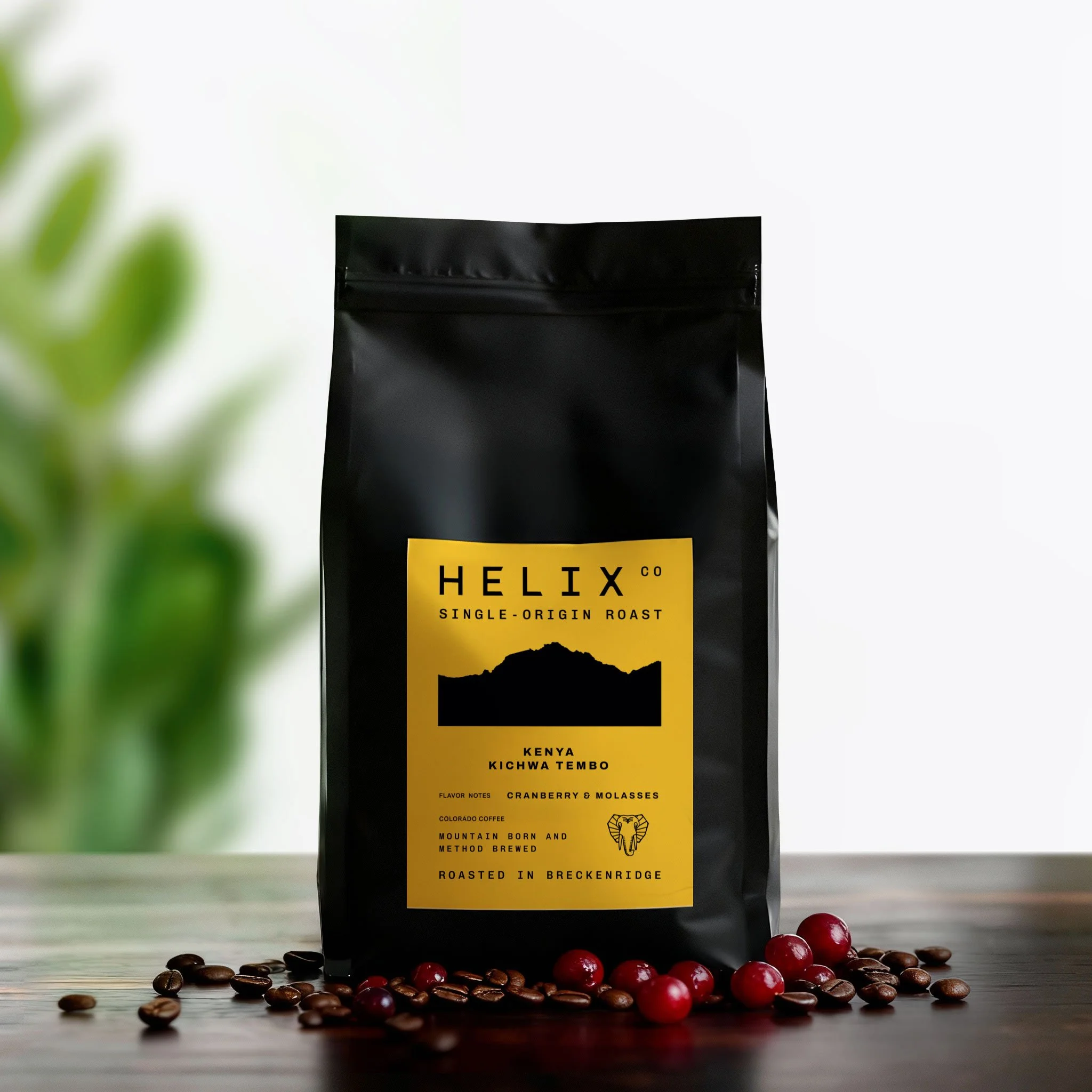
Fresh cranberry, dried fruit, and molasses flavors with good acidity and candy-like sweetness.
Background:
This Kichwa Tembo is a washed AA lot from a classic Kenyan region. The Kichwa Tembo roasted offering present a classic, hardworking Kenya profile with citrus fruit like grapefruit, bright and tangy acidity, balanced sweetness, and some of the complexity expected from a Kenyan.
-
Most of Kenya's coffee is produced by smallholders delivering to factories (central processing units) who predominantly produce Washed coffees. Estates are also best-known for their Washed lots. The Washed process in Kenya may vary slightly from place to place, but it generally contains a soaking step that is unique to this growing country. First the coffee is picked ripe and depulped the same day, then it is normally fermented in open-air tanks made of concrete or cement for 24–48 hours. It's then washed thoroughly using water channels before being soaked underwater for 12–72 hours. It is then spread on raised beds to dry.
-
More than a decade ago, before the term "microlot" became common usage in specialty coffee, Cafe Imports began direct sourcing coffees in Kenya during a time when most importers were unwilling to take the chance on bringing in small, traceable lots of coffee from individual mills and estates.Jason Long, one of Cafe Imports' principal partners and coffee buyers, decided that the risk was worth the potential reward. Thanks to Jason's willingness to go out on a limb, our longstanding partnerships in Kenya allow us to source exceptional, traceable Kenyan coffees, often from the same factories and estates that we have partnered with for years. We are also able to offer a selection of full-container, mid-price lots of solid quality, including our signature Kichwa Tembo and Regional Select Uteuzi Jimbo projects, that make for great blend or lower-cost single-origin options.
-
Batian, SL28, SL34, Ruiru 11
Although this specific lot is not traceable down to a single variety, it represents a blend of Batian, SL28, SL34, and Ruiru 11. -
Coffee is sold by way of two main marketing systems in Kenya: by auction at the Nairobi Coffee Exchange, or through direct sales, often called “Second Window.” Since the establishment of the auction system in the 1930s, the majority of Kenyan coffee has been traded this way. It’s evolved from traditional “open-outcry” bidding on the market floor to a largely silent system, with an electric trigger for each trader to hit during bidding. Through this system, prices of highly sought-after coffees can soar, as agents work to outbid each other on the coffees that are available each week. The auction system works like this: Each estate or co-operative society works with a marketing agent, whose responsibility it is to bring the coffees to auction to sell to the highest bidder. The marketing agent will charge somewhere between 1.5–3% of the price of the coffee. There is also a government tax imposed on each sale. Auctions take place on Tuesdays throughout the year in Nairobi where marketing agents tender samples of the milled coffees to interested bidders; the coffees that are due to be auctioned on any given week are printed in a catalog available through the Exchange. Many exporters will bid on lots at auction and sell them privately to importers and roasters. The introduction of the “Second Window” created an avenue by which a farmer and a buyer (such as a roaster or importer) can negotiate a price somewhat separate to the bidding at auction, typically by discussing and agreeing upon the deal before or during the harvest. Some exporters will also cup and directly purchase coffees from their associated marketing agents or mills, negotiating a price based on the previous week’s auction prices for specific grades (AA, AB, PB, and so on).We source our Kenyan offerings at auction, through exporters, and from our “Second Window” relationships, allowing us access to a wider range of Kenyan coffees of different price points and cup profiles.